Robert Frost: The Full Evaluation
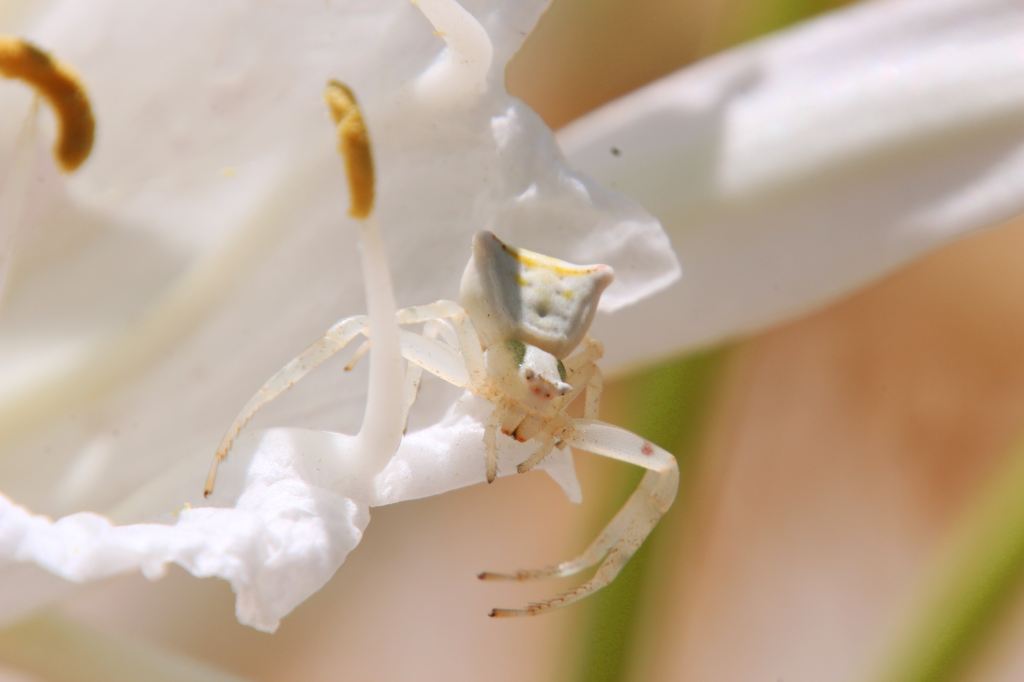
Robert Frost is a masterful poet, combining conversational diction and simple nature scenes to explore themes about death, nature’s effect on man, responsibility, and reality. He vividly pictures scenes that most people could easily envision, such as “Birches…loaded with ice a sunny winter morning,” and gives them more profound meaning, such as the longing to temporarily escape from life’s toils (Frost, “Birches”1, 6). His poems take readers on a journey, and the end sometimes poses more questions than answers, drawing readers back time and time again. For example, in the poem “Design,” Frost wonders about the nature of the universe and the powers behind it. Though it is a sonnet, and sonnets typically resolve in the sestet, Frost instead questions why the fat spider ate the moth, wondering if there is an evil power in charge of the universe (“Design” 13-14). This poem caused me to think of my faith and about why the world has cruel events like this, no matter how small they are.
In an essay about the forming of a poem, Frost himself says that his poetry takes him on a journey, and he does not know the end. He writes, “[A poem] finds its own name as it goes and discovers the best…in some final phrase…No surprise for the writer, no surprise for the reader” (Frost, “Figure a Poem Makes” 859). Because his poetry takes people on journeys and gives them “a momentary stay against confusion,” Frost became a national figure (Frost, “Figure a Poem Makes” 859). Everyone can find connections in his poems because they are ambiguous, contain many layers for interpretation, and are relatable. For example, I felt a connection to the poem “Neither Out Far nor In Deep.” This poem tells about people staring out at the sea rather than the unchanging land, and I interpreted it to mean that people wish for more and long for adventure or an escape from unchanging reality (Frost, “Neither Out Far nor In Deep” 1-4). Whenever I am on a beach or shore, I always look out at the open water. For me, the water seems like an escape from monotony or a new possibility. I know the land has more opportunities and varied landscapes than the water, but I still look out at the water regardless, just like the people in the poem. Frost’s relatable, common yet profound, and vivid poetry is undoubtedly worthy of study.
Works Cited
Frost, Robert. “Birches.” 1916. The Compact Bedford Introduction to Literature, by Michael Meyer, Tenth ed., Bedford/St. Martin’s, 2014, pp.848-849.
—. “Design.” 1936. The Compact Bedford Introduction to Literature, by Michael Meyer, Tenth ed., Bedford/St. Martin’s, 2014, p.856.
—. “On the Figure a Poem Makes.” 1939. The Compact Bedford Introduction to Literature, by Michael Meyer, Tenth ed., Bedford/St. Martin’s, 2014, p.859.
—. “Neither Far Out nor In Deep.” 1936. The Compact Bedford Introduction to Literature, by Michael Meyer, Tenth ed., Bedford/St. Martin’s, 2014, pp.854-855.
Get new content delivered directly to your inbox.
 Independent Poet Study: Robert Frost